PROJECT CONCERN ALULMMNIE :
This is an open Web Page for the many Volunteers, paid staff, friends and all those who Project Concern have touched over the years. Please add to this page by contacting the Webmaster Vern TOLER vern@armory.com if no contact try vern_toler@yahoo.com
Although Project Concern International is quite different from the days
when Dr Turpen formed it, the organization is still going strong supporting
health needs through the world. Check out their web page at http://www.serve.com/PCI/index.html
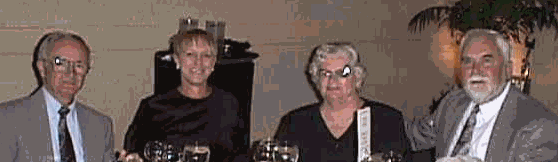
We had a wonderful reunion in San Diego thanks to the hard work of Bertha Sanchez and Mary "Ball" Tykeson. Project Concern International was our host and provided us with many events included a visit to headquarters and PC activities in Mexico. Mr. & Mrs. Jenkison had a great dinner party for us at there home in the hills of San Diego.
ARE YOU READY FOR Y2K
Dr. Tom and Sannie Cook will host Project Concern Reunion for the
year 2000 in
Charleston, SC Phone 843-795-2055
Dr. Tom &
Sannie Cook have set a tentative date for the reunion,
It is 21- 27
February 2000 At Charleston, SC Be sure to contact them
Dr. Tom &
Sannie Cook
722 Clearview
Drive,
Charleston,
SC 29412
Syanni@Charleston.net Phone # is 843-795-2005
Dr Thomas & Sannie COOK Donna an Dr. Roger Hofmeister
Host for Y2K PC Reunion
Charleston, S.C.
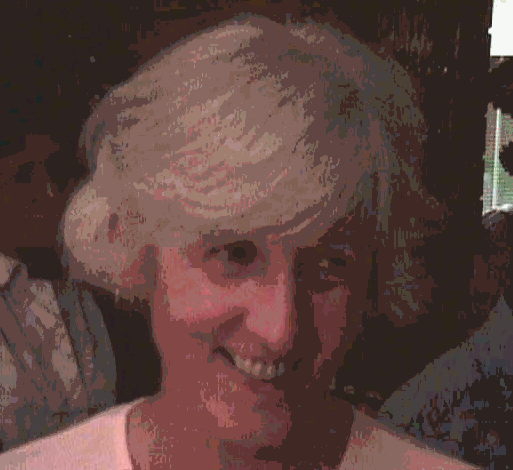
Johanna Hueter
Served as a Nurse for PC Vietnam
Lives in Germany.
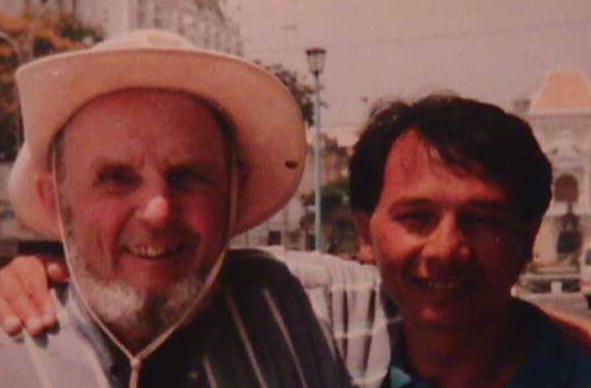
The group first assembled in Thailand where we visited several temples, all were beautiful, but they were as crowded as Disneyland. The traffic in Bangkok was so bad it took several hours to go only a few blocks. On one of our field trips we were taken to a Thai Montagnard village. Which formally grew Opium Poppies, some of which was still growing. It was obvious by seeing the villagers that the opium had destroyed the health of the village people.
As soon as we landed at Tan Son Nhat Airport in Vietnam we knew we had entered the Twilight Zone. Nothing had changed in the past 25 years. When we entered the immigration area things began to go down hill. There was no help available for our members who had to use walkers. The baggage inspection and paper work was heavy. All recorded Video tape was confiscated, it seems they don’t want information brought in. Driving through Saigon it seemed that progress had gone backward, streets were crowded but few automobiles and no military traffic. At the hotel our passports and visa’s were picked up and we again had to fill out questionnaires that requested information as our past in Vietnam, friends and relatives in Vietnam, with their addresses and our religion. Ironically there was a newspaper bragging about their efficiency when a cruise ship arrived. The newspaper said that they put souvenir stands on the dock so the passengers could by souvenir since most of the time was taken up by immigration due to entrance and exit Visa’s.
One of the early signs of what was ahead for us was a former Vietnamese employee of PC sent his wife to the hotel to greet us. Since he had been arrested and ordered not to talk to foreigners. He remained across the street so he could see and wave to his friends. The Hotel did not honor it’s contract with Clement Travel and had raised the fees by 35%. It did not take long to spot the secret police The most obvious one was the elevator Captain, Although the hotel had only two small elevators his job was to push the elevator call button whenever a guest went to an elevator, although this job seemed menial, he was a sharp looking young man who carried a "walkie talky" often gave orders to others in the hotel. Once while in the lobby I saw him observe a man enter the elevator then he quickly and without asking picked up the man’s visa from the hotel desk and took it to another room. Another interesting incident with the secret police in Saigon was while I was walking with some members of our group some young men pushing bikes on the crowded sidewalk started bumping me with their bikes and they picked my pocket. When that happened a man who was following us pulled a gun then quickly put it away when we saw him. Secret police are the only ones who would dare carry guns in Saigon. I did not see the uniformed police with guns except at checkpoints along the road. There were many things in Saigon that would bring back memories to many "GI’s" Since some of the streets had Bar’s open to the streets which were filled with foreigners, and there were a few hotels with suggestive signs. There were a few interesting tourist changes along the waterfront. There were several well-lit floating restaurants and one luxury-floating hotel, which rooms run around $200.00 a night. The food at the "tourist trap restaurants and hotels was expensive and poor quality. But the food in the Vietnamese restaurants was great and a full meal cost less then a dollar. Since sanitation is not a way of life in Vietnam I felt safer eating the food where I could see it prepared then I did eating in the hotels where we didn’t see the kitchen. There was one change in Saigon that was out of this world. At night the main street and park in front of the Rex Hotel becomes alive with young people cruising on motor scooters and bikes. They are all well dressed and just riding in circles for hours and stopping only to eat or pick up friends, it was is quite a sight and luckily I was able to record some of it on video.
Our stay in Vietnam was handled by "Saigon Tourist" A State Run tourist agency. I will have to admit they did have some good tours set up, the buses were small but they were air-conditioned which helped compensate for the bad roads. One thing they haven’t figure out is the need for pit stops along the way, especially when some of their clients were senior ladies. Although we paid them "Saigon Tourist" controlled us; they would not stop at our request and also told us when we could take pictures. They provided all of our transportation and on our way to Dalat we went through Lin Heip where there was a former PC hospital, we asked them to pass by it but they refused.
With our group were three Montagnard’s, who were sent to school in the States and become refugees when the war ended. They since had become US citizens, gotten married and raised families, none of them had seen their parents for over 24 years. And everyone in the group was anxious to get to Dalat to see them reunited with their families.
Dalat was a French resort town at an elevation of 6000 ft, with a lake and pine forest the town was always clean and very colorful since the Montagnard’s would be in town dressed in very colorful clothing. Each clan weaves their own plaid design in their clothing. When we arrived at the hotel, everyone was quite stunned. The town was dirty and overcrowded, yet there were no Montagnard’s in sight. We found that we had to use the "grape vine" to get word to the Montagnard villages that we had arrived so the parents could be reunited with their children and so PC could contact some of the hospital workers they had trained. The PC group consisted of 41, mostly former volunteers at the Lien Hieyp and Dam Pow hospitals; five of our group was Doctors. And we all planed to work a few days at the hospital. The next day we were informed by the "so called Peoples Committee that Foreigners were not permitted to enter Montagnard areas. It seams that the Peoples Committee doesn’t mind lying since that morning Joe Bangert an ex-Marine from Brewster, MA. Who speaks Vietnamese was leading a commercial tour group to a Montagnard Village. We soon found that a large part of our time was presenting proposals to the peoples committee and waiting for them to get back with an answer, they could not comprehend that we represented no government and were all volunteers who paid for the trip out of our own pocket and for humanitarian reasons, we still were hoping to get a chance to visit the hospitals, even if it was to deliver some of the medical supplies we brought over but each day it seemed we were given more restrictions on our movements. Meanwhile our Montagnard’s were beginning to wonder when and if they would see their parents. The mother of the two girls showed up at the a Catholic Church and they had a nice reunion, but they could not visit in private nor could they go to their hotel The family of the girls seemed fearful and returned to their village after only a few hours visiting. HaKin Lienghst was my roommate during the trip so I traveled a lot with him. He was born in Dalat where his father was a schoolteacher. They had a home and car in Dalat, which the Communists took from his parents, when they were sent to a reservation. . When HaKin was thirteen he was selected to go to the States to go to school by a volunteer group. while going to school he lived with twenty three different families. In the States. He completed college became an U.S. Citizen, got married and has two children. HaKin was getting worried about his chance to see his family, It was obvious that we were followed and he was worried about repercussions towards his parents. When we saw some Montagnard men in town he asked them if they knew his relatives, but they seemed afraid to talk to us. Finally we received a note that his parents had arrived at a hotel in town so we went searching for it. Another person and myself took our Video cameras with us to take pictures we were lucky for his parents were outside the hotel and they had a very emotional reunion. We then went to the porch of the hotel to take pictures and talk since the hotel was locked and the door guarded. . After a short visit I left to give him a better chance to visit with his parents, I did notice the secret police were getting bolder and coming closer to us. After I returned to the hotel the PC group was having a meeting to discuss the latest information from the peoples committee things seemed to be getting worse but we were all happy to hear that HaKin found his parents. We then went on a temple tour and when we got back to the hotel we found out that a few minuets after I left HaKin He, his parents and the PC member Ken had been arrested and their cameras and tapes were confiscated. It was hard to figure out the charges since they seem to make up their laws as they go along. In essence he was told he could only take pictures of weddings and funerals. They were interrogated for several hours and fined $200.00 each then told to report back to the police station the next day.
Some of our group spoke French and they went to a French tavern and when they started speaking French to the operator the secret police told the proprietor to close the tavern in five minutes. What seemed to be unusual is that there were a lot of foreigners in DaLat who seemed to have no problems, in fact I spoke to one German who was traveling thorough Vietnam on a bicycle. In spite of the trouble our group encountered we had a great time there too. The average Vietnamese was friendly to us and wanted to talk to us. Although the restaurants were not as fancy as I remember from the past, we had a some great meals, and at "Lys" Restaurant the operators provided us with some wonderful "sing-a-long" sessions and even the secret police seemed to enjoy it.
Dalat has a large Catholic Cathedral built by the French. Our tour guide pointed out the church and bragged that Vietnam has freedom of worship. And travel it happened to be Ash Wednesday so some of our Catholic members of the group decided to go to services. But that didn’t sit well with the peoples committee, and they increased the restrictions on us. We were then told that we could not leave the hotel except for quick individual trips to market to buy bottled water or souvenirs We could only eat in the hotel restaurant and Vietnamese had to obtain a police permit to talk to us, since that sounded like house arrest we took the hint and started to make plans to leave Dalat early, No refund from our hotel. And we still had to pay for next hotel since it wasn’t pre-paid. Dalat is a resort town and there is a lot of new foreign construction in town. There is a giant golf course being built the villas and the luxury hotels are being renovated. It would be interesting to see who would be willing to pay big money to come to Dalat while the Communist peoples committee is in town. Although it hard to figure out any reason for their action it seems that the Vietnamese look down upon the native Montianards and the Communist are doing their best to suppress them. It took us several hours to get all the clearance to leave town. It was difficult for HaKin, for his family had sat across the street for several hours so they could see him, although they were not allowed to visit, his parents were not with the group. After several hours one of the former PC Hospital workers was permitted a short visit, then Ha Kin’s brother was permitted a short visit. Both visits were limited to the steps of the hotel. The hotel had its secret police too, since it didn’t have an elevator his job was to open the door. What was unusual about him was that although he was a doorman he had the best room in the hotel and his wife and child accompanied him He acted like he didn’t speak English. But when he was surprised to see me open part of my suitcase to make it into a backpack he couldn’t resist asking me about it in good English.
Things changed for us when we finally left the Highlands, and we headed for NhaTrang, The road was difficult and while in the mountain pass we were not permitted to take pictures, When we passed Cam Ran Bay the sailors at the Vietnamese Navy Base gave us friendly waves. In NhaTrang it was like another world. The first thing we noticed is that we didn’t have to fill out police questionnaires at the hotel. And we seemed to have a lot of freedom. The beach was clean and the water was pleasant although at the time there was a strong undertow so our swimming was limited. Some of our members rented motor scooters to ride around town. I was especially interested in Nha Trang as it was my home base for a couple of years. I rented a bicycle took off to find some familiar places. although it has been more than two decades, Nha Trang hasn’t changed much. Every where I went people would came up to me to talk. A Mr. Pham Tho came to me and said he was an interpreter and worked for U.S. Aid, He insisted that I ride with him on his motor scooter, he then drove me to many of the places I had worked before and to many people who knew some of the people I had worked with, everyone was extremely friendly and they were able to give me some reasonable assurances that some of my friends that I was concerned about made it out of Vietnam. The restaurant food was economical and good and the Hotel rates were reasonable. As we were getting on the bus for the return trip to Saigon Mr. Tho came to the bus to give me copies of his ITT diploma as a Communications Controller and also a copy of his Communist Prison Record. All this seemed to panic our "Saigon Tourist Leader". I believe all of us enjoyed Nha Trang, and I was a little sad for I felt I was leaving Mr. Pham Tho with some false hope. One of the more adventurous members took the civilian Railroad Train to Saigon and he had an interesting story to tell.
Our next two days were controlled tourist trips, which were rugged but interesting Our trip to My Tho was for a river cruse to an Island Orchard set up for tourists. On the Island our guide explained the various types of tropical fruit trees, He also took us to several homes where the families showed us around and explained their living style and after the tour we were taken to a restaurant where we were served many types of tropical fruits along with stories about them. Although this was strictly a commercial tour for foreigners it was well worth the time and money. We visited the " Cao Dia Holy See" this was a religion founded by a Frenchman about 70 years ago and it combined Buddhism and Christianity. The temple was really unique with great artwork. We were permitted along with other foreigners to observe their services from a balcony. We then visited Cu Chi the Vietnamese Army had created a museum from a portion of VC underground tunnels, They were quite interesting and difficult to go through, I did get some good Videos of them but after a while I thought the VC finally got me. As I was barely able to muster the strength to get out, The problem was that since it was hot and humid and I hadn’t drank any water for several hours I had heat exhaustion. The tour was operated by the military and they explained their military tactics without the expected anti-American rhetoric at the hotel on the last day in Vietnam the group gave me a surprise Birthday Party. We all had a great time joking about our predicament. Our final problems were at the airport where we went through several different inspection procedures. There x-ray equipment is set up to spot videotape in luggage; also their x-ray procedures are Not Film Safe. Each of my VideoTapes was inspected but they passed. But all of the tapes Ken took were confiscated. I don’t know what criteria they used to keep the tapes but since I expected the problems I didn’t try to hide any tapes and I had them all in one spot easy to get to. We were all quite relieved once we were in the air and out of Vietnam.
Project Concern has had medical units in Hong Kong for over thirty years and they hosted a typical Chinese style dinner for us. In a few years Hong Kong will come under Communist control and that was a concern for many people there. Although it is still, a shopper’s paradise the prices of items are no longer a great bargain.
My thoughts about Vietnam have always been different than many people; I have always had a compassion for people throughout the world wherever I have been asked to serve. While preparing for the trip I had a strong feeling that things were not going right so part of my preparation for the trip was to handle our legal matters in case I didn’t come back according to schedule. The trip has strengthened my thoughts on what I think our country should do. The most emotional problems rest with the POW/MIA issue. And information about them. The main portion of the problem I still blame on the anti-war activist of the sixties, for they are the ones that created the political atmosphere that caused our personnel to evacuate Vietnam rapidly and weaken our negotiation powers. The Vietnamese record system is in chaos and I doubt if they have many reliable records. The rapid growth of the jungles and the humid atmosphere destroys what few reliable relics are left. The trade embargo only hurts the people of Vietnam who are friendly and willing to work hard. The embargo does not hurt the Communists Leaders for they have all the materials and power they want and they have no care about the people they serve. If American people were free to move about Vietnam and make inquires I am sure we will gain more information about our missing then we would get by demanding information from the Communists for the credibility of the Communists government is nil. If the American business people were allowed to enter into joint ventures they would be able to hire people and perhaps instill some of our standards of non-discrimination. This is important for in Vietnam Montagnard’s, and employees of the former regime are prevented from gaining meaningful employment. In the past Americans were Government employees giving aid in hopes of gaining friendship. And of course there were the volunteer humanitarian groups also giving aid. The new American is the businessperson expecting a profit and the Tourist expecting service for the savings they are spending. There is also the ex "GI’s" who wants to return and see Vietnam again but will need the freedom to travel and attempt to visit old friends, and places where they have served. If this was possible I feel Vietnam will eventually change for the better and the Communists will have to change too or be left by the wayside.
Mon-ta-gnard (mon tuhn yärd', -yär') n.
Number of Mon-Khmer and Chamic-speaking
Peoples of the highlands of central and
S Vietnam and Laos.
*copied from Microsoft dictionary disk.

(Christmas in Vietnam, 1969)
by Jim Schueckler
You may download a word-processor version of this story
The usual carols played in the mess hall at supper and the calendar said "December 24, 1969," but it didn't feel much like Christmas Eve. We were tired from a long day of flying many missions picking up infantrymen and recon patrols from field locations. We brought them back to the big airfield at Phan Thiet for the Christmas cease-fire. Gunship helicopters had escorted us because they were frequently needed, but today not a shot had been fired in either direction. It seemed that soldiers on both sides of this war were glad to allow the cease-fire to start one day early.
It had been a hot day, and even in the evening, after the withering sun had dipped below the horizon, we sat sweltering in T-shirts in the pilots' hooch. The air was somber. The usual discussions of recent close calls and superior airmanship were subdued by the subject on everyone's mind, but nobody would talk about: the recent loss of four pilots and four crewmen. We joked about the cease-fire and wondered how long it would last. One man predicted that the base would be hit with mortars just before midnight. It seemed that there was nothing to celebrate. One pilot tried to change the mood. "We have to do something happy! Let's sing Christmas Carols!" He said, almost in anguish. But no one started singing.
Mike Porter, my copilot, finally blurted out, "Let's take up a collection for the Project Concern hospital!" I thought back to the first time I saw that hospital at Dam Pao; I was copilot for Ted Thoman. A medic showed us a baby in desperate need of medical care, suffering from convulsions and dehydration. Flying that Huey helicopter at top speed, Ted soon had the baby girl and her parents at the hospital at Dam Pao. That "mission" made me feel good; it was the only one, so far, that was not part of making war. The memory was vivid because only hours before we had extracted a recon team under fire. The bullet holes in the aircraft had been counted, but not yet patched.
Mike shook my shoulder to wake me from my reverie. "Hey Jim, let's ask to fly the Da Lat Macvee mission tomorrow to take money that we collect tonight." Under his crewcut blonde hair, Mike's boyish face lit up, and I had to remind myself that he was among the older Army helicopter pilots; he was 22.
Mike's excitement was contagious--I jumped up, said "Great idea, let's go ask!" and almost ran out the door. We stopped at the crew chiefs' hooch and asked Bascom if he would like to fly tomorrow. He and Dave quickly agreed, also wishing to escape the prevailing sadness.
Major Higginbotham, the company commander, was in the operations bunker. I explained our plan but he answered: "We don't have the Da Lat Macvee mission. In fact, there are no missions; there's a cease-fire tomorrow . . . remember?"
It had been Mike's idea, but the prospect of not being able to make this mission was too much, so I pleaded the cause: "Please, Sir, could you call battalion and see if some other company has Da Lat Macvee?" Macvee, the Military Assistance Command Vietnam was the US Army unit of advisors to the Army of the Republic of Vietnam. One or two US advisors were assigned to small military compounds in almost every large village. A Macvee mission usually meant flying the province Senior Advisor around to visit the villages. Macvee missions were a respite from the tension and danger of combat assaults or recon team missions, but had their own risks of weather, wind, and being without gunship escort. Flying near the beautiful city of Da Lat, up in the cool mountains, was an additional treat.
The CO picked up the phone and then started writing on a mission sheet form. He handed it to me and said, "Da Lat Macvee helipad, oh seven thirty; We took the mission from the 92nd." He opened his wallet, and handed me some money. "Here. Good luck!"
When we reached the gunship platoon hooch three pilots looked on sadly as one man raked a pile of money across the table towards himself. We made our sales pitch about the hospital. The lucky gambler pushed the money towards us and said: "Here--take it! I'd just lose it all back to these guys anyway, Merry Christmas!"
Similar responses began to fill our ammo can with money of all denominations as we roamed among hooches and tents, collecting money from guys whose generosity began to make me a believer in the Christmas spirit again. At one stop, a pilot gave us a gift package of cheese. Food! We could take food! We decided to make another pass through the company area, asking for cookies, candy, and other things. As we left one hooch with our arms full, the men inside started singing "Deck the Halls," and soon those in other buildings were competing. Christmas Eve had arrived in this tropical land of heat and snakes and death!
When we reached the mess hall, the cooks were still there, preparing for Christmas Day. The mess sergeant replied: "Do you have a truck with you? We have a surplus of food because so many guys went home early." One pilot went to get the maintenance truck while the rest of us checked dates on cans and cartons of food. Then we drove to the infantry mess hall where we accepted four cases of freeze-dried foods. The medic at the dispensary gave us bandages and dressings.
We tied down the pile of booty in the Huey. After returning the truck, the four pilots walked together back to our hooch. One looked at his watch and said, "Hey guys! It's midnight. Merry Christmas!"
My alarm clock startled me out of a deep sleep. A check with my wristwatch verified the time, but something was wrong. There was no shouting, no rumble of trucks, no roar of propellers and rotors. Mornings were usually bustling with the sounds of men and machines preparing for the daily business of war, but today there were no such sounds. I thought to myself, "Is this what peace sounds like?"
In the shower building, Mike and I talked about what our families would be doing today on the other side of the world. As all short timers do, I reminded Mike that in just two weeks I would be going home, my year in Vietnam over. My wife promised me another Christmas celebration, with decorated tree and wrapped presents. I would be also be meeting another Mike for the first time, my son, now only a few months old.
After breakfast, the others went to the flight line while I called for a weather briefing. When I reached the helicopter, Mike was doing the preflight inspection and had just climbed up to the top of the Huey. Together, we checked the main rotor hub and the "Jesus nut" that holds the rotor on the helicopter. Everything was fine; we were ready to fly. We took off and headed for the mountains.
It always felt good to fly with this crew; we were a finely tuned team. The rugged and muscular Lee looked every bit like a cowboy from his hometown in Bascom County, Wyoming; hence his nickname "Bad Bascom." He was the crew chief of this Huey and did all the daily maintenance on it; it was his "baby." With Mike as copilot and Dave as door gunner, we had taken that helicopter into and out of many difficult situations, from landing supplies on a windy mountain top to extracting recon teams from small clearings while taking enemy fire. The radio call sign of the 192nd Assault Helicopter Company was Polecat; we were Polecat Three Five Six and proud of it. This day was beginning to feel even better because we were going to use our combat skills for a mission that seemed so unrelated to war.
I decided to climb higher than usual in the smooth morning air. As we left the jungle plains along the coast, the green mountains of the Central Highlands rose up to meet us. On the plateau, a thick blanket of fog lay like cotton under a Christmas tree. It spilled over between the peaks in slow, misty, waterfalls. In the rising sunlight the mountain tops cast long shadows on the fog. The beauty and serenity of the scene were dazzling. Had I noticed this before? I think I had, but today the gorgeous scenery wasn't a backdrop for the unexpected horror of war.
The mess hall had been quiet. The airfield was quiet. The radios were quiet. We weren't even chattering on the intercom as we usually did. Our minds were all with different families, somewhere back home, thousands of miles away. Everything was quiet and peaceful. It felt very, very, strange. Was this the first day of a lasting peace, or just the eye in a hurricane of war?
As our main rotor slowed down after we landed at Da Lat, a gray-haired Lieutenant Colonel walked up to the Huey. "Merry Christmas! I'm Colonel Beck. We have a busy day planned, my men are spread out all over this province, and we're going to take mail, hot turkey, and pumpkin pies to every one of them!" He handed me a map that had our cross-stitched route already carefully drawn on it. His distinguished look turned to a big grin as he added, "Oh--would you guys like to have some Donut Dollies with us today?" Four heads with flight helmets were eagerly nodding "YES" as the two young ladies got out of a jeep.
Donut Dollies were American Red Cross volunteers, college graduates in their early twenties. Although no longer distributing donuts like their namesakes of World War I, they were still in the service of helping the morale of the troops. At large bases they managed recreation centers but they also traveled to the smaller units in the field for short visits. For millions of GIs they represented the girlfriend, sister, or wife back home. Over the Huey's intercom, Colonel Beck introduced Sue, with the short, dark, hair and Ann, a brunette, the taller one.
Soon we were heading towards the mountains with a Huey full of mail, food, Christmas cargo, and two American young women. For the soldiers who had been living off Vietnamese food and canned Army rations at lonely, isolated outposts, these touches of home would be a welcome surprise.
As we approached the first compound Colonel Beck, by radio, told the men on the ground that we were going to make it snow. Sue and Ann sprinkled laundry soap flakes out of the Huey as we flew directly over a small group of American and Vietnamese soldiers who must have thought we were crazy. Several of them were rubbing their eyes as we came back to land. I will never know if it was emotion or if they just had soap in their eyes.
The three Americans came over to the Huey as we shut it down. Ann gave each of them a package from the Red Cross and Sue called out names to distribute the mail. After about 15 minutes of small talk, Colonel Beck announced, "We have a lot more stops to make" and got back into the Huey. The soldiers stood there silently, staring at us as we started up, hovered, and then disappeared into the sky.
At the next outpost, Colonel Beck left us so he could talk privately with the local officials. The crew and I didn't mind escorting the Donut Dollies. It was easy to see how happy the soldiers were to talk with them. I wondered how Sue and Ann were feeling. Their job was to cheer up other people on what may have been their own first Christmas away from home; if they were lonely or sad, they never let it show. Throughout the day, the same scene was replayed at other small compounds. Some soldiers talked excitedly to the girls, while others would just stand quietly and stare, almost in shock to see American women visiting them out in the boonies.
Finally, with the official Macvee work finished, we were above the hospital at Dam Pao. Mike landed us a few hundred feet from the main building. Several men and women came out, carrying folding stretchers. They first showed surprise that we were not bringing an injured new patient, and then joy when we showed them the food and medical supplies. Mike opened the ammo can full of money and said, "Merry Christmas from the Polecats and Tigersharks of the 192nd Assault Helicopter Company." One of the women began to cry and then hugged Mike.
A doctor asked if we would like to see the hospital. He talked as we carried the goods from the Huey to the one-floor, tin-roof hospital building. "Project Concern now has volunteer doctors and nurses from England, Australia, and the USA. We provide health services to civilians and train medical assistants to do the same in their own villages. We try to demonstrate God's love, so we remain neutral. Both sides respect our work, and leave us alone."
One of the women described a recent event. Two nurses and a medical assistant student were returning from a remote clinic in the jungle when their jeep became mired in mud. Many miles from even the smallest village, they knew that they would not be able to walk to civilization before dark. A Viet Cong foot patrol came upon them, pulled the jeep out of the mud, and sent them on their way.
There were homemade Christmas decorations everywhere; most made on the spot by patients or their families. Inside, the hospital was clean and neat, but stark; there were few pieces of modern equipment. The staff lived in a separate small building.
As we moved into one ward, a nurse gently lifted a very small baby from its bed, and before I could stop her, she placed him in my arms. He'd been born that morning. Although they had expected complications, the mother and baby were perfectly healthy! As I held the tiny infant, I started to tell the others that I would soon be meeting my own baby son, but the words got stuck in my throat. So I just stood there, marveling at the warmth and hope in that tiny new human being nestled peacefully in my arms. Would this child grow up in peace, or would this tiny life be snuffed out by a war that had already claimed thousands of Vietnamese and Americans? Would the deaths of my friends this past year help ensure for him a life of peace and freedom, or had they died in vain?
The staff invited us to stay for supper with them, and I could tell the invitation was sincere. However, the sun was getting low, and I didn't want to fly us home over eighty miles of mountainous jungle in the dark. I also would have felt guilty to take any food, even so graciously offered, from the most selfless people I had ever met. As we started the Huey, the doctors and nurses were about fifty feet away, still talking with Colonel Beck. The Colonel took something out of his wallet and gave it to of one of the men with a double-hand handshake. He then quietly climbed on board.
There was no chatter on the intercom as we flew back to Da Lat. Mike landed the Huey softly. I asked him to shut down and got out quickly. Then we all stood there silently; I wanted to hug Sue and Ann, but I knew Donut Dollies were not allowed to hug. Instead, we all exchanged warm handshakes and Christmas wishes. Colonel Beck thanked us for taking him to the hospital. We, the crew of Polecat 356, got back in and flew away and out of the lives of our new-found friends.
Silence also marked the flight back to Phan Thiet. I thought of my family and friends back home and couldn't wait to see them. I also thought about the good friends I would soon be leaving behind, and other good friends who would never go home to their families.
I reflected on the rare nature of the day. I would always be able to remember Christmas Day in Vietnam as very special. Here, in the midst of war, trouble, and strife, was a time of sharing, happiness, love -- and peace.
Epilog: I attended the 1993 dedication of the Vietnam Women's Memorial to place letters of remembrance from the Vietnam Helicopter Pilots Association. As friendly and helpful as 24 years earlier, other Donut Dollies were eager to help me find Sue and Ann, identified from a photograph I had taken at Dam Pao in 1969. One Donut Dolly finally exclaimed: "That's my sister!" and led me to Ann, and I collected on a long-overdue hug. Sue and I talked by telephone a few days later. I felt good to learn that Christmas Day in Vietnam was also special to them.
Project Concern International, 3550 Afton Road San Diego, CA 92123 is still doing similar humanitarian work in Asia and several US cities.
Permission is hereby granted to copy for non-profit use.
Jim Schueckler,8219 Parmelee Rd, LeRoy NY 14482
(716)768-2877 FlewHuey@iinc.com edit 3/3/97