KARS 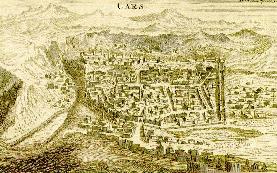
Kars, situated on the eastern borders of the
Ottoman Empire, was the first occupied by
Russians in 1828-1830.Abdullatif Pasha, who
was appointed governor of this sancak in 1853,
took his 13 year old grandson Namik Kemal with
him when he travelled to take up his post. This
young boy, destined to become of Turkey's most
celebrated nineteenth century poets, was greatly
influenced by his stay in a city so distant and so
different from Istanbul. The city was occupied by
Russia for five months in 1856, and again in 1877, this time for 41 years. 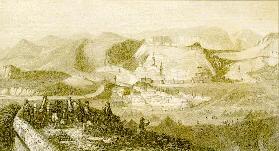
During the Caucisian campaign of Murad II (1574-1595), the city's walls were rebuilt. Evliya Mosque was also constructed during this period. Travellers remarked that the walls of the city were well built, that there was a castle within the walls, which in some places consisted of five parallel ramparts. Iron gates led into the city. They noted the shrines within the town, and described the pasha sarayi or residence of the governor, and the Seljuk period kervansaray. Tavernier visited Kars twice, in 1632 and 1635, and writes the city was situated on fertile soil.
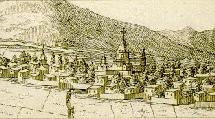
Tournefort arrived in 1701 from Erzurum. His description of Kars is illustrated by engraving of both city and the ruins of nearby Armenian city of Ani.
Despite warnings from local officials about the danger of robbers, Tournefort travelled to nearby
Catak to see the antiquities there.

